Top Social

Image Slider

Showing posts with label Autobiography. Show all posts

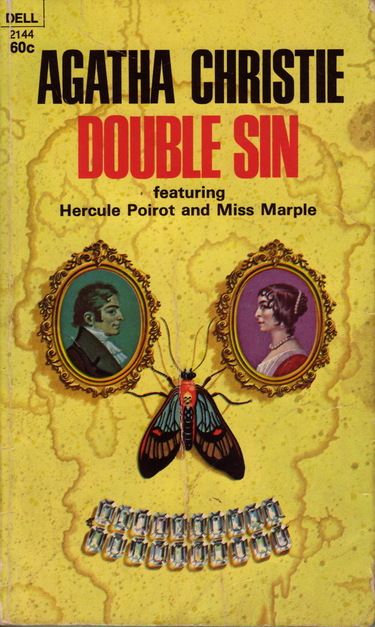
Short Story Honesty & The Occult: Double Sin + The Golden Ball | 1961 & 1971

10.29.2016
(image from here)

(image from here)
"Suddenly the child stirred. His eyes opened. He looked past his mother towards the open door. He tried to speak and she bent down to catch the half-breathed words. 'All right, I'm comin,' he whispered, then sank back. The mother felt suddenly terrified; she crossed the room to her father. Somewhere near them the other child was laughing. Joyful, contented, triumphant, the silvery laughter echoed through the room. 'I'm frightened, I'm frightened,' she moaned.

He put his arm around her protectingly. A sudden gust of wind made them both start, but it passed swiftly and left the air quiet as before.The laughter had ceased and there crept to them a faint sound, so faint as hardly to be heard, but growing louder till they could distinguish it. Footsteps -- light footsteps swiftly departing.

Pitter-patter, pitter-patter, they ran -- those well-known halting little feet. Yet -- surely -- now other footsteps suddenly mingled with them, moving with a quicker and lighter tread."
  - The Golden Ball and Other Stories, p. 166

The Sum of It:
More short stories for the both of us this week! We are kind of reaching our limit of clever-ish things to say about dear Agatha's short stories, so we decided to combine our two book posts this week and offer a little Halloween weekend twist on our latest reads.

But first, a little spotlight on some of the stories we read in Double Sin & Golden Ball. These two collections are both a smattering of all of Agatha's sleuths and styles. We have Poirot and Marple and James Bond (no, not THAT James Bond) and little romantic couples and CREEEPYYYY couples and cat people (yes, CAT PEOPLE) and the list goes on and on! The title story from Double Sin and Other Stories is a fun one. Poor over-worked Poirot (he just CAN'T say no to trivial cases because his little grey cells need stimulation!) agrees to go on a bus holiday with Hastings to get some R&R. Along the way they meet a nice girl named Mary who works in the antiques business with her kind aunt. Mary is on her way to meet up with an American collector who wants to buy a set of "valuable miniatures." When the group stops for lunch, Mary is sure she sees a man trying to steal her suitcase with the miniatures! She runs outside to confront the guy and he's like whoa, settle down, we just have the same suitcase (aka, my airport baggage claim nightmare.) Mary's like whoops, my bad, kind sir! HOWEVER, when they arrive at the hotel later that day, Mary is devastated to find out that her miniatures WERE STOLEN AFTER ALL! Have no fear, Poirot is here! (sayeth Poirot) and the vacationing sleuth gets to work finding his poor friend's treasures.

Double Sin is a rather fun collection if you want to have a bit of Poirot and a bit of Marple in your life. Some other fun stories from the book are Sanctuary (Miss Marple's vicar's wife pal, Bunch, heads into church to do some stuff and stumbles across a man DYING on the church floor. His mysterious last words are "sanctuary!" and something about jewels. Bunch gets in touch with Miss Marple straight away to help discover what happened to the poor man), and The Theft of the Royal Ruby (aka The Adventure of the Christmas Pudding - one of our favorites!)

The Golden Ball and Other Stories is a bit disappointing, to be honest. It's a mix of the not-so-great romantic mystery vignette stories from The Listerdale Mystery (some of them are seriously like, moralistic tales, it's weird) and some straight up #DARK ghost stories from The Hound of Death. We have had a running text conversation about our thoughts and feelings on these short stories and the stretches concerning Golden Ball were almost all Emily giving Audrey the basic creepy plot followed by exclamations of "WHAA?!?!" (Spoilery example: "One with a ghost gypsy who tries to save someone from a terrible fate by marrying him then turns out terrible fate is that he accidentally kills ghost gypsy then he dies too and they both are ghosts!" "WHAT. AGATHA STOP IT.") - essentially, if you're looking for some ghosty reads for Halloween, definitely give this a crack, because it's got all the haunted houses and ghost children your Halloween heart might desire (starting about midway through the book, with The Hound of Death). If you're looking for your typical Agatha short story gems, give this one a pass, and get yourself to Poirot Investigates.

The YOA Treatment:
In her Autobiography, Agatha discusses her mother's dabbling in the occult (in addition to several other religions, including Catholicism and Buddhism #wellrounded). Agatha talks about Mother Clara having a sense about danger and even sensing people's thoughts, and this interest transferred a bit to the daughter, as many of Agatha's early stories and some of her subsequent work followed her interest in spiritualism and paranormal activity.

Many of the tales in The Golden Ball (which was not published in the UK), which were pulled from the alternate collection The Hound of Death, concern the terrible mysteries of the paranormal world. Compared to Agatha's novels, these stories feel totally unusual, intentionally scary, as opposed to a who-dunnit style mystery. If you're in the market for a quick spooky tale to read aloud to your pals over the light of a flickering Jack-o-lantern this weekend, we can recommend The Lamp, or The Hound of Death.

- A. & E.

P.s. Don't forget to sign up for Booktrack and try out a fun way to experience Agatha, for free! Go back to our post from a few days ago to find the link for signup.

Rick Steves' Agatha Christie: They Came to Baghdad | 1951

9.07.2016
Image from the delightful Pulpcovers.com
"When Crosbie had gone Dakin sat bent over his desk. He murmured under his breath, 'They came to Baghdad...' On the blotting pad he drew a circle and wrote under it Baghdad -- Then, dotted around it, he sketched a camel, an aeroplane, a steamer, a small puffing train -- all converging on the circle. Then on the corner of the pad he drew a spider's web. In the middle of the spider's web he wrote a name..." - They Came to Baghdad, p. 12

The Sum of It:
Spies! Murder! Morse code! International intrigue! Kidnapping! Accomplished liars! Adventurers! Archaeologists! Air travel! Hair dye! Dust storms! Dickens references! This book has it all. Really like a lot. Like, almost everything that could potentially be in a mystery book is in this one, and it's not super long, page-count-wise. As a result it is a #teensybit #confusing, but overall a fun read. 

Essentially, the main character, Victoria Jones, is a clever fabricator of tales and great at imitating people, but is a terrible shorthand typist and quickly gets fired from her job for mocking her boss' wife (ha!). As she is eating two sandwiches and considering her next move on a park bench, she sees a super hot guy named Edward, gives him a smile, they chat for five minutes and she falls in love. Him too, apparently, but the bummer for the lovebirds is that he has to move to Baghdad for work the next day. No matter, decides Victoria, she'll just figure out how to get a job in the next few days that will take her to Baghdad too so she can track him down. Oy vey, right? But don't worry, turns out Agatha is a little more meta than we might have given her credit for in the past.

Anyhow, Victoria makes up some dignified references, gets a job escorting a lady with a broken arm to Baghdad, goes about searching for her boo. Meanwhile, the "President" (no indication of which country, assuming America) as well as a bunch of other dignitaries are planning a big meeting in Baghdad. An international man of mystery/government secrets is also cautiously making his way to the city, carrying critical information about international affairs, as is an international woman of mystery. Some sort of international intelligence agency is also converging on Baghdad to protect secrets guy and his liaison, a famous explorer, as well as the dignitaries coming to the meeting. ALSO a network of baddies who kind of sound like some weird combination of Communists and neo-Nazi types except more obsessed with youth and less obsessed with race? ALSO a bunch of archaeologists are around, presumably to allow Agatha to show off some of the new stuff she had learned about archaeology in her own travels in the Middle East. A million different things are happening, seemingly unrelated to each other, until a bleeding man stumbles into Victoria's hotel room one night, begging to be hidden. She hides him, only to find him dead in her bed after the fake cops chasing him have left! Quickly, she becomes embroiled in all the international spy intrigue that's going on and gets quite a few nasty surprises along the way. And also learns a ton about archaeology. #themoreyouknow

The YOA Treatment:
So, as noted, there is SO MUCH GOING ON in this book, and SO many characters that it was honestly hard to track at some points. A couple times when a new character was introduced I had to flip back through the part I'd already read to make sure I hadn't already met them before because there are so many people coming and going, some with multiple identities. Agatha really doesn't write many genuine spy mysteries, so I think maybe it's just not something she's as practiced with. However, eventually the details coalesce and it gets pretty good! Quite caper-y, which we all know I enjoy. I'm also pleased with Agatha turning what had become kind of a common love-story narrative for her on its head a bit. 

One thing about this book that is obviously pretty cool is that Agatha takes the opportunity to turn her rich experiences travelling in Baghdad and beyond into beautifully detailed settings and scenes, from a stroll through the Copper Market to the date palms along the Tigris to the elaborate and glamorous hotels of the city. The descriptions of how a dust storm appears suddenly and leaves everything in its wake coated in a rusty brown are too realistic not to be drawn from real life experiences! 

Additionally, it's clear that Victoria's experiences assisting on an archaeological dig are pulled straight from Agatha's joyful times spent assisting with her second husband Max's digs throughout the Middle East #teamMax. In her autobiography, Agatha writes a lot about how happy she was doing that work, and constantly learning more about it, by Max's side. The work and sites are described in loving detail, and Victoria, who has hitherto been a bit flakey, suddenly develops a real devotion to the work of discovering, cleaning, repairing, and cataloging artifacts for all kinds of reasons that really seem more Agatha than Victoria, which is actually kind of cool. 

- E. 

The Old Man and the Twee: The Body in the Library | 1941

8.03.2016
Image from the blog Pulp Covers
"Downstairs in the lounge, by the third pillar from the left, there sits an old lady with a sweet, placid, spinsterish face and a mind that has plumbed the depths of human iniquity and taken it as all in the day's work. Her name's Miss Marple. She comes from the village of St. Mary Mead, which is a mile and a half from Gossington; she's a friend of the Bantrys and, where crime is concerned, she's the goods, Conway." 
- The Body in the Library, p. 101

The Sum of It:
Yayyyy you guys it's Miss Marple! This is only like the second legit full Miss Marple novel I've gotten to read this year and I have been so excited about it. I remained excited through the reading of it, because this one is great (is that starting to sound like a blog cliche? For real though, so many of them are really great, which is why Agatha has been crowned Queen of Mystery millions of times over in loads of countries. So we're all on board, yeah?) It all begins in an "Oh What a Beautiful Morning"-esque scene at Miss Marple's friend Dolly Bantry's estate #Oklahoma #UKnotOK #RodgersandHammersteinandAgatha. Don't believe me? Give this a whirl: 

"Mrs. Bantry was dreaming. Her sweet peas had just taken a First at the flower show. The vicar, dressed in cassock and surplice, was giving out the prizes in church. His wife wandered past, dressed in a bathing suit, but, as is the blessed habit of dreams, this fact did not arouse the disapproval of the parish in the way it would assuredly have done in real life. 

Mrs. Bantry was enjoying her dream a good deal. She usually did enjoy those early-morning dreams that were terminated by the arrival of tea. Somewhere in her inner consciousness was an awareness of the usual noises of the household. The rattle of the curtain rings on the stairs as the housemaid drew them, the noises of the second housemaid's dustpan and brush in the passage outside. In the distance the heavy noise of the front-door bolt being drawn back.

Another day was beginning. In the meantime, she must extract as much pleasure as possible from the flower show, for already its dreamlike quality was becoming apparent."

In some of her more lyrical writing, Agatha is basically depicting waking up in a grand house as the opening scene to a Broadway musical. We half expect Mrs. Bantry to subsequently be dressed by birds, BUT INSTEAD she is awoken by a quivering housemaid who busts in the door to inform the Bantrys that there is a body in the library!

Turns out there is a random stranger's corpse in the library, a young woman with platinum blonde hair, too much makeup (even in death), a cheap dress, and varnished fingers and toes. Who is this girl?? Why is she dead in the Bantrys' library? How did she get there? So many mysteries right away, and Mrs. Bantry naturally calls in Miss Marple tout suite. Eventually we learn that she's a temporary dance hostess from a resort hotel in the area who had recently gained the favor of a wealthy and aged hotel guest, Conway Jefferson, who is wheelchair-bound, though quite acute otherwise. Bantry had recently decided that he was going to adopt this rando (whose name, in life, was Ruby) and bequeath upon  her a fortune, leaving his daughter-in-law, her son, and his son-in-law, totally up a creek (his actual children died in a plane crash and he had been keeping these two semi-relatives close since then). Right away, then, there's a couple suspects: the two semi-relatives who were on the brink of being bumped out of a fortune. One problem: both have alibis. Agh so whodunnit?? The rest of the cast involves a bridge hostess, tennis coach/handsome dancing pro, a dude who can't find his car, a man who works in films, a girl guide (aka girl scout), and even a quick stop-in with our friends at the St. Mary Mead vicarage from #blogfavorite Murder at the Vicarage!

There are like four detectives on the case, one of whom is familiar with Miss Marple and wisely advises everyone else to let her in on the huddle, because he knows her to be one sharp lady. As usual, we get quite a few St. Mary Mead anecdotes-as-evidence, including a frog jumping out of a clock, as well as some Miss Marple realness on how the world is dark and full of terrors #thenightisdarkandfullofterrors. In part because the ending is not quite the same as the tv Marple version, I did NOT know who the culprit was til she FINALLY revealed it at the very end. 

The YOA Treatment:
So there's a bit of treatment in that summary, but this book provided yet more evidence that Miss Marple is really a winner. I think both of us going into this year felt sure we were Poirot devotees, and have come to realize that Miss Marple is at least giving him a run for his money. She is so clever, yet unassuming, and gets to the heart of the problem each time. In her autobiography, Agatha notes that her real interest in murder mysteries is not the criminal, but the victim. Miss Marple seems to reflect that interest in her detecting as well, always sympathetic. 

Agatha also seems to really enjoy giving her characters some flaws, and where  Poirot is quite conceited and so particular as to be ridiculous at times, Miss Marple's nosiness, seemingly absent-minded human interaction style, and frank statements sometimes rub other characters the wrong way. However, what she may lack in manners, in my opinion, she more than makes up for with her truly dark sensibility about the general depravity and evilness of the human condition #heartofdarkness. All through this book, she's cautioning people to basically not give anyone too much benefit of the doubt, and in the end, that's the reason she solves the mystery and leaves the police in her dust. 

This book was a fun read and satisfies the Marple craving nicely, for those who are so inclined (or even for those who don't know they are!)

- E.

Don't You Know That You're Toxic? | Agatha & Poison

7.14.2016
This is an actual photo of Agatha in her WWI nurse outfit from the Agatha Christie Archive! We found it in this really interesting article from The Telegraph about how WWI influenced Agatha and her writing. Give it a read!
It's no secret (certainly not from those of you who've read a few books) that poison is one of Agatha's favorite weapons. She gets pretty creative with it at times, sometimes it's a mysterious tribal potion on the tip of a tiny tiny dart, sometimes it's mixed in with some coffee, and sometimes it's dissolved in a nice champagne cocktail #SparklingCyanide. As a part of our month with the #MaidensofMurder, we wanted to do a post looking into Agatha's interest and expertise in poisons as a murder weapon #ladieschoice #accordingtomostfictionaldetectives

The article we referenced in the photo caption notes that Agatha's work as a WWI nurse was pretty grim stuff, despite her own "stiff upper lip" attitude anytime she writes about it. She experienced quite a bit of grisly wounds and surgeries as she was caring for the soldiers who came through her hospital. As the article points out, despite this firsthand experience, she seems to prefer writing about the "clean method of poisoning." In fact, Agatha's first murder was a poisoning, in The Mysterious Affair at Styles. She got the idea to write a detective story while she was working in the dispensary at her town's wartime hospital. In her own words:

"It was while I was working in the dispensary that I first conceived the idea of writing a detective story. The idea had remained in my mind since [my sister] Madge's earlier challenge--and my present work seemed to offer a favourable opportunity...I began considering what kind of  detective story I could write. Since I was surrounded by poisons, perhaps it was natural that death by poisoning should be the method I selected."

She goes on to explain how terrifying working in the dispensary was at first, and how cautious and nervous she and her fellow amateurs were, but also points out what she learned during that time:

"After working in a hospital with several doctors one realizes how medicine, like everything else in this world, is very much a matter of fashion: that, and the personal idiosyncrasy of every medical practitioner."

This understanding of the idiosyncrasies of medicine and the physicians who prescribe it inspired some of Agatha's craftiest murderers. We certainly know one creepy doctor gave her some material, which she also describes in the autobiography:

"One day, seeking perhaps to impress me, he took from his pocket a dark-coloured lump and showed it to me, saying, "Know what this is?" "No," I said. "It's curare," he said. "Know about curare?" 

I said I had read about it. 

"Interesting stuff," he said, "very interesting. Taken by the mouth it does you no harm at all. Enter the bloodstream, it paralyzes and kills you. It's what they use for arrow poison. Do you know why I carry it in my pocket?"

"No," I said, "I haven't the slightest idea." It seemed to me an extremely foolish thing to do, but I didn't add that.

"Well you know," he said thoughtfully, "it makes me feel powerful." [#terrifiedeyesemoji]

She goes on to talk about how she had often wondered about him after she finished working with him, saying "He struck me, in spite of his cherubic appearance, as possibly rather a dangerous man [#noshit]. His memory remained with me so long that it was still there waiting when I first conceived the idea of my book The Pale Horse--and that must have been, I suppose, nearly fifty years later."

Here's hoping that guy never murdered anybody. But thanks to him, and to Agatha's wartime pharmacy experience, her imagination created a lot of our favorite mysteries, including Sparkling Cyanide, this month's #MaidensofMurder read! Our month of maidening continues next week with a post about the short story that led to Sparkling Cyanide, leading up to our review of the book itself!

- A. & E.

Sunbathers Beware: Evil Under the Sun | 1940

7.11.2016
(image from here)
"It was, Hercule Poirot thought, like watching the needle of a compass. Patrick Redfern was deflected, his feet changed their direction. The needle, do what it will, must obey the law of magnetism and turn to the north. Patrick Redfern's feet brought him to Arlena Stuart."
-Evil Under the Sun, p. 15-16

The Sum of It:
Papa Poirot is on vacation again! But, like usual, he isn't even totally off the detective clock because wherever Poirot is, murder cannot be far behind. Poirot is enjoying a summer holiday on the English coast at a little island resort called The Jolly Roger Hotel (which Agatha goes to great pains to describe as fabulous but it sounds very #Daytona to us...). As always, he is surrounded by a smorgasbord of fellow vacationers, some of whom are quite boisterous and have wild theories about how sunbathing will LITERALLY put hair on your chest (Mrs. Gardner, we're lookin at you) or are constantly bragging about how rich they are (shut it, Mr. Blatt) or are famous and refined fashion designers with exotic perfume (yes ma'am, Rosamund Darnley). The most sensational guest at The Jolly Roger is Arlena Stuart: a gorgeous actress with a reputation for being a home wrecker and a pretty dull husband. Drama starts heating up big time when Arlena and young, handsome, and very married Patrick Redfern get their not-so-subtle flirt on. No stranger to hot mess #lovetriangles, Poirot steers clear of the drama (aside from eavesdropping on their alone time), hoping nothing deadly becomes of all this sexual tension. But sure enough, Patrick Redfern soon stumbles upon his summer fling #MURDERED on a secluded island beach, apparently strangled as she lay sunbathing!

Of course nearly the entire resort population had a death wish on Arlena: there was no love lost between Arlena and her husband Kenneth Marshall and stepdaughter, Linda, Patrick Redfern's timid wife Christine wasn't too thrilled about the hold Arlena had on her husband, and Rosamund Darnley would be very interested in becoming Mrs. Marshall #2…except Kenneth Marshall had no intention of ever divorcing his wife. Evil Under the Sun is a terrific example of straightforwardly enjoyable Agatha Christie: plenty of fun characters, juicy drama, and a solution that isn't necessarily her most clever, yet we dare say keeps you guessing until the last minute! We also highly recommend this as a beach read. Not only will you feel right at home with the waves crashing and sun shining as Agatha describes the pleasures of #beachlife, but this book goes by nice and fast if you have a few hours of uninterrupted time.

The YOA Treatment:
As with many of her books, infidelity plays a big part of Evil Under the Sun not only as a characteristic of arguably the two least likable characters, but also as a possible murder motive. Agatha Christie was sadly well acquainted with the heartache that comes from an adulterous marriage. Agatha's first husband, Archie, left her for another woman early in her writing career and it sent her into an understandable spiral of sadness. As described in her autobiography, Archie was generally super selfish and pretty straightforward about being in love with someone else and even kind of blamed Agatha for making him unhappy because she had to go take care of her sick mother (GOOD GRIEF, ARCHIE).

While Agatha went on to remarry and move past her first husband #TeamMax (who maybe also was a little unfaithful but we don't know that for sure and if it happened it didn't break her heart like Archie did so we're still #TeamMax), you can sense the feeling she puts into writing characters who have a cheating spouse. Christine Redfern's heartache feels very real in Evil Under the Sun as she watches her husband swooning over Arlena, and basically all the other characters have various reasons for disliking Arlena's homewrecking-self, and judging Patrick (although pretty much everyone blames Arlena for being a siren and gives Patrick the #Ulysses-style excuse of being helpless under her gaze #noexcusesforbeingadickguys #lookinatyouArchie). There's even a priest in this book who just goes with "that woman is straight up evil" for her siren-like ways.

Even though Agatha kind of sadly gives cheaters the benefit of the doubt in her autobiography (one of the only times we wanted to be like #LEANIN, girl, don't blame yourself for this!), she uses the behavior as a theme in many of her books, and in this one we hope she got a little satisfaction from giving a cheater their just desserts (disclaimer: no one is saying murder is appropriate retaliation, just sayin').

-A. & E.

A Series of Unfortunate Events: Taken at the Flood | 1948

6.25.2016
(image from here)
"The unexpected has happened, eh?"
"On the contrary," Poirot corrected him. "It is the expected that has happened — which in itself is sufficiently remarkable." -Taken at the Flood, p. 170

The Sum of It:
This week's first read, Taken at the Flood (also called There is a Tide) begins with Hercule Poirot spending an air raid in The Coronation Club listening to a story. A Major Porter, described as the club bore, is droning on about some rich-family drama and Poirot, trying to distract himself from the understandably frightening air raid, can't help but listen in. Major Porter is telling the story of the Family Cloade, and how the wealthiest Cloade, Gordon, had been suddenly killed when his London home was bombed. Just before his death, Gordon had married a young, beautiful widow named Rosaleen and, without having made a new will after his marriage, the entirety of Gordon's vast fortune had gone to her upon his death…much to the chagrin of the rest of his family. But Major Porter's story doesn't end there. He goes on to speculate on the actual dead-ness of Rosaleen's first husband, one Robert Underhay, with whom Major Porter was acquainted. Perhaps Underhay didn't actual die in Africa as originally reported, Major Porter hypothesizes.

It is not until two years later that Poirot has need of the details of this story. The war has ended and the Family Cloade are collectively rather strapped for cash. Back when Gordon was alive, the family wanted for nothing. The genuinely generous Gordon encouraged his brothers and sisters and nieces and nephews to live life as they wished, send him their bills, and made no secret that he planned to leave all of them very well-off after his death. But now the Widow Rosaleen controls his millions, and Rosaleen's brother, David Hunter, controls Rosaleen. The Cloades, understandably, would really benefit from Major Porter's air raid tale to hold some truth. And lo and behold, one day a mysterious stranger comes into town, attempts to blackmail David Hunter about the whereabouts of Rosaleen's first husband, and then is found murdered in his hotel room. Poirot is called to the scene and his memory of The Coronation Club story is finally useful. But something doesn't sit well with Poirot. Everything seems to have fallen into place a little too easily. To Poirot, the solution makes more sense if just about everything is not what it seems…

The YOA Treatment:
While this story is not my absolute favorite Poirot novel, there are some elements that I do appreciate about Taken at the Flood. Most interestingly, we get a look into British life post-World War II. The fact that relationships are strained, family members have been killed, taxes are high, and money isn't as plentiful as it once was all play a part in not only acknowledging the real world of many of Agatha's readers at the time of this novel's publication, but also the mystery itself. Even Poirot himself has been changed a bit by the war. He is, of course, still his ever-confident self, but is willing to show some moments of vulnerability. For example, he talks about how he was frightened during aid raids. He says "I am sitting very sick in my stomach (for I did not like air raids, and I am not very brave though I endeavor to put up the good appearance)."

We know from her autobiography that Agatha herself lived through some pretty scary times during the bombings on London, even losing part of her home at one point. Though in typical Christie style she kept calm and carried on, she chose to write two books at once (The Body in the Library and N or M?) to keep herself distracted from the constant bombs and sirens. Her real home, Greenway, was even requisitioned in the war effort due to its coastal location. This story shows that Agatha, though she wasn't a sentimental type of person, appreciated what her countrymen had been through. I admire Agatha for staying true to her readers by keeping her characters in a world to which they could relate.

-A.

When You Want to Learn More About Agatha: Supplemental Read Recommendations!

6.23.2016
(image from here)
"If she [Agatha Christie] is read by miners, shop assistants, and old age pensioners, equally she is read…by academics, politicians, scientists and artists. They would feel ashamed to sit on a train reading a Tarzan book; they would hide a James Bond inside a copy of the Guardian; but they wouldn't think twice about opening up a Christie." -A Talent to Deceive, p. 4

Happy Thursday, dear readers!

One of our readers, NYC Book Owl, asked if we would do a post about some of our favorite supplemental Agatha reads. One of the things we have loved about our Year of Agatha project has been learning more about the Queen of Crime through her own words as well as through the words of other fans who have spent a great deal of time studying her writings (#GOALZ). So, in this post you'll find some of our recommendations for those who might be interested in diving deeper into the world and life of Agatha Christie!

1) An Autobiography by Agatha Christie
This list should absolutely start with Agatha's own amazing autobiography in which she tells some great stories not only about growing up, experiences and people that influenced her writings, and how she felt about her success.

2) Come, Tell Me How You Live by Agatha Christie
Agatha describes this book as basically her way of blanket-ly answering all the questions she got from friends and fans about her time working with her archaeologist hubby, Max, on his digs in Syria. We can just imagine some second cousin thrice removed asking her at Christmas "Oh hey what's it like living in Syria??" and Agatha reaching into her bag and just handing her a copy of this book. Since so many of her stories were inspired by her travels in the Middle East and her experiences on digs, this is a neat window into that part of her life.

3) Agatha Christie's Secret Notebooks by John Curran
We are kind of obsessed with John Curran. Mostly in a OMG YOU ARE SUCH AN AWESOME AGATHA NERD JUST LIKE US kind of way. Curran got to live every Agatha fan's dream and go through her handwritten notes to learn more about how she planned the novels we all love so much. We love this insight into her work, and will certainly be consulting it as we get into phase 2 of The Year of Agatha: writing our own Christie-style mystery!

4) The Life and Times of Miss Jane Marple by Anne Hart
This is a "biography" of Miss Marple using all the clues about her given to us in her novels and other Agatha writings. This is SUCH a fun read because as you go through it you think "oh hey yeah what do we know about Jane Marple as a young woman?! And yes, just how many nieces and nephews does she have??" Anne Hart has also written a similar volume about Hercule Poirot.

5) A Talent to Deceive: An Appreciation of Agatha Christie by Robert Barnard
This is a fantastic read for anyone wanting to get more into the nitty gritty analysis of Agatha Christie. Barnard talks about Agatha Christie's place in the classic fiction genre, her strategies for deception, and how her to-this-day mysterious disappearance as a young woman influenced her writing. There is also a section of his one paragraph reviews of each book that are often SO FUNNY they had us laughing out loud!

6) Poirot and Me by David Suchet
This book is truly such a gem, particularly for those of you who (like us!) basically equivocate David Suchet with Hercule Poirot. This is a delightful account of David Suchet's more than 20 years of playing Poirot, and offers a glimpse into the emotional connection he has with the character and his personal stories from filming the show.

7) Agatha: The Real Life of Agatha Christie by Anne Martinetti, Guillaume Lebeau, and Alexandre Franc
Finally, although this graphic novel could be seen as over-simplifying Agatha Christie's history, it is a cute, quick overview of her life and worth it just for the pictures alone!

Have any of you read a book from this list? What are some that we missed? We are always on the lookout for more Agatha learning :)

-A. & E.

Stranded and Afraid: And Then There Were None | 1939

6.20.2016
(image from here)
"But what you don't seem to realize is that [no spoilers!] is mad! And a madman has all the advantages on his side. He's twice as cunning as any one sane can be." 
And Then There Were None, p. 213

The Sum of It:
We were so happy to see so many of our Instagram friends are huge fans of our latest read, And Then There Were None. Our summary this week will be fairly brief, because, to be quite honest, you really have to read this book and it is best read if you've avoided spoilers! So, in a sentence: And Then There Were None follows a group of ten strangers as their weekend getaway (for various reasons) to a posh mansion on a secluded island turns terrifying when guests start dying one by one…in ways that eerily follow an ominous poem framed on the wall about "ten little soldier boys"…

The YOA Treatment:
We dare say, if you are going to read ONE Agatha Christie novel, this is the one to read. It has been hailed by fans and critics alike as Agatha Christie's best novel, and we can certainly see why. Even Agatha Christie herself wrote in her Autobiography of how proud she was of the work she put into ATTWN, and its final result:

I had written this book because it was so difficult to do that the idea had fascinated me. Ten people had to die without it becoming ridiculous or the murderer being obvious. I wrote the book after a tremendous amount of planning, and I was pleased with what I had made of it. It was clear, straightforward, baffling, and yet had a perfectly reasonable explanation; in fact it had to have an epilogue in order to explain it. It was well received and reviewed, but the person who was really pleased with it was myself, for I knew better than any critic how difficult it had been.

This mystery is so engrossing that we've had several friends report that they finished it in just a day or two. Since we have both read this one before, and recently watched the awesome new adaptation of it from the the BBC/Lifetime, some of the initial confusion and amazement at the mystery's resolution wasn't there for us in this reading, but we certainly can't help but admire the deft crafting of characters, atmosphere, and straight up #TERROR in this short novel.

One of our favorite things about recommending this book to folks who are new to Agatha is that it's a great hook. People get a great feel for how fun it can be to devour one of her brilliant mysteries, and what a truly fantastic writer she really is. Several folks have already asked for a list of other Agatha books they should track down and add to their summer reading list, which we are so pumped about, since bringing more converts into the Agatha fold was the whole goal of our project here at the Year of Agatha! Incidentally, if you or someone you know is looking for a short list of Agatha's to get started with, take a gander at our first quarter favorites! Soon we'll be updating the blog with our second quarter favorites as well.

- A. & E.